Spotlight · Recap · SXSW 2026 · Austin

What AI Can't Teach.

On the SXSW Creator Economy stage, Cassandra Bankson made the case for the one thing no algorithm can replicate: a human who has actually lived the thing she teaches.

If you missed SXSW this year, here's the short version: in a room full of creators in Austin, the conversation everyone leaned in for was about what happens to human expertise now that anyone can ask a chatbot anything. Cassandra Bankson was the voice in that room who could answer it from the inside.

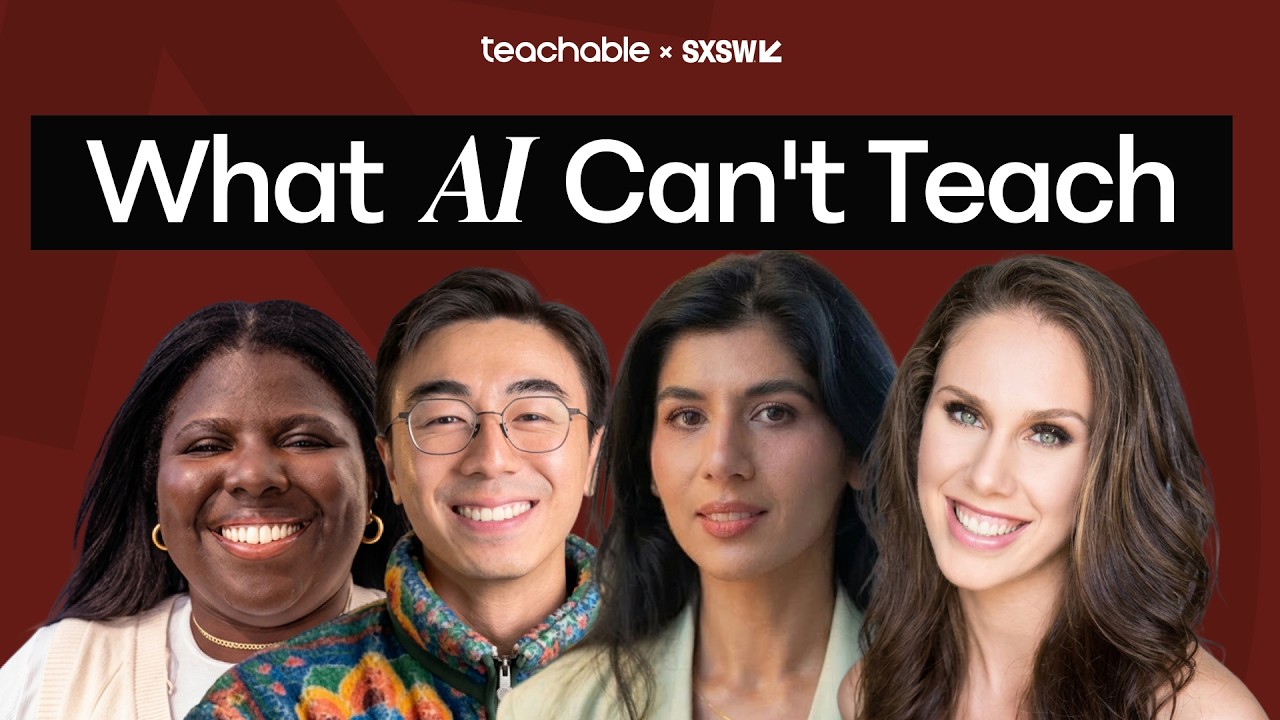
On March 15, 2026, she joined How Creators Teach: Turning Knowledge Into Income and Community on the SXSW Creator Economy track, a panel hosted by the online education platform Teachable. She shared the stage with Sundas Khalid, a Google analytics lead and AI creator, and Eugene Yao, founder of Dopamine Mastery, in a conversation moderated by Teachable's Olivia Owens. More than sixty people packed the session.

The theme that ran through the whole week, as Teachable put it in its own recap, was simple: human presence is becoming scarce, and scarce things become premium. Few speakers can make that idea land like Cassandra can. She built a platform of more than five million followers and over 500 million content views by being honest about her own skin, and she now teaches and advises from the rare seat of a creator who sells and a clinician who knows the science.
Official SXSW listing
Watch the session

The full SXSW 2026 panel

Sixty minutes on how creators turn knowledge into income, why trust is the real product, and where the human element has to stay. Cassandra's segments are woven throughout.

What AI Can't Teach panel, SXSW 2026, presented by Teachable, featuring Cassandra Bankson

On stage at SXSW: Olivia Owens of Teachable, Cassandra Bankson, Sundas Khalid, and Eugene Yao. Photo: Teachable.

The takeaways

Six ideas the room took home

Every point below is something Cassandra said on stage. This is the kind of thinking she brings to a keynote: specific, a little contrarian, and immediately useful.

01 · MEMORY

People remember how you make them feel

She teaches clinical content through real human stories, because, in her words, people "remember what you teach, but they remember how you make them feel."

02 · THE LINE

Decide where AI ends and humans begin

AI can organize the calendar. It cannot be the boss you report to or the person you trust with your skin. Knowing that line is the whole job.

03 · AUDIENCE

Build for them, not for you

Ask customers what they need, then think past it. People in 1920 would have asked for faster horses. Your job is to see the car.

04 · COURAGE

Done beats perfect

Nobody likes how they sound on camera. The flaws you obsess over, your audience never notices. Sit down, get over yourself, and ship it.

05 · BELONGING

A course is a place to belong

People are funneling into private communities because they want to be part of something. That sense of belonging is what a course really sells.

06 · CLARITY

Most problems repeat

"Most problems are the same. They're just wrapped differently." The skill is packaging an old, real human need in a way that finally lands.

In Cassandra's words

Straight from the SXSW stage

Verbatim from the session transcript.

"As humans, we almost have to ask ourselves, what does it mean to be human? Knowing where AI can be helpful and beneficial versus where you want to keep the human element is really important. There's something to be said about the human touch, and I don't think that's ever going to go away."Cassandra Bankson · SXSW 2026
"How would you feel reporting to a boss that is an algorithm in a computer? How would you feel dating someone, and then you find out, oh, they're just very well-spoken AI? There's something to be said about that human experience."Cassandra Bankson · SXSW 2026
"They also remember what you teach, but they remember how you make them feel."Cassandra Bankson · SXSW 2026
From the transcript

Two moments worth the full quote

We transcribed the session. These are the longer passages, in her own words, that show how she teaches a room.

On how she started, and why it worked

Asked to introduce herself, she went straight to the truth of it.

"I've been a content creator for 17 years, started completely on accident with the struggle I was having with my acne. I would cover it with makeup to the point that people couldn't tell that I had it anymore, so I could become a runway model. But I felt very disingenuous, because on one hand I'm being called pretty, and then on the other I'm called rocky road. So I started my journey in medical aesthetics, sharing with people what I was learning, what was working, what wasn't."

On whether courses survive AI

Her answer reframed the whole debate from "will it last forever" to "what is working right now."

"Old technologies will be replaced by new ones, and maybe eventually courses will be replaced by something else. But the question is, what's working here and now? A lot of people are funneling into private communities, the ones that take a layer of password and security. They want to be a part of something. That's what a course is. And so even if it doesn't last 100 years, it's working now. It's providing value."

See all speaking topics and her full speaking history, browse where she has spoken, or view the press and media kit. For the brand side of this same conversation, read what this SXSW panel means for beauty brands on Marketing With Meaning.

Bring this conversation to your stage

Keynotes, fireside chats, panels, and workshops on the beauty industry, the creator economy, and technology, in person or virtual, worldwide.

Check Availability